Craft & Execution

Domain
Constraints
Fragmentation
Brand
I joined Aareon as the sole designer within a team of around 10 developers, taking over responsibility for the design system. With no formal design handover, I had to quickly embed myself in a highly technical environment and bring clarity to how design and engineering worked together.
The goal was to modernise a large legacy design system while staying within strict technical and layout constraints. This meant improving visual consistency, accessibility, and usability across multiple SaaS products, many of which are used by elderly and disabled users.
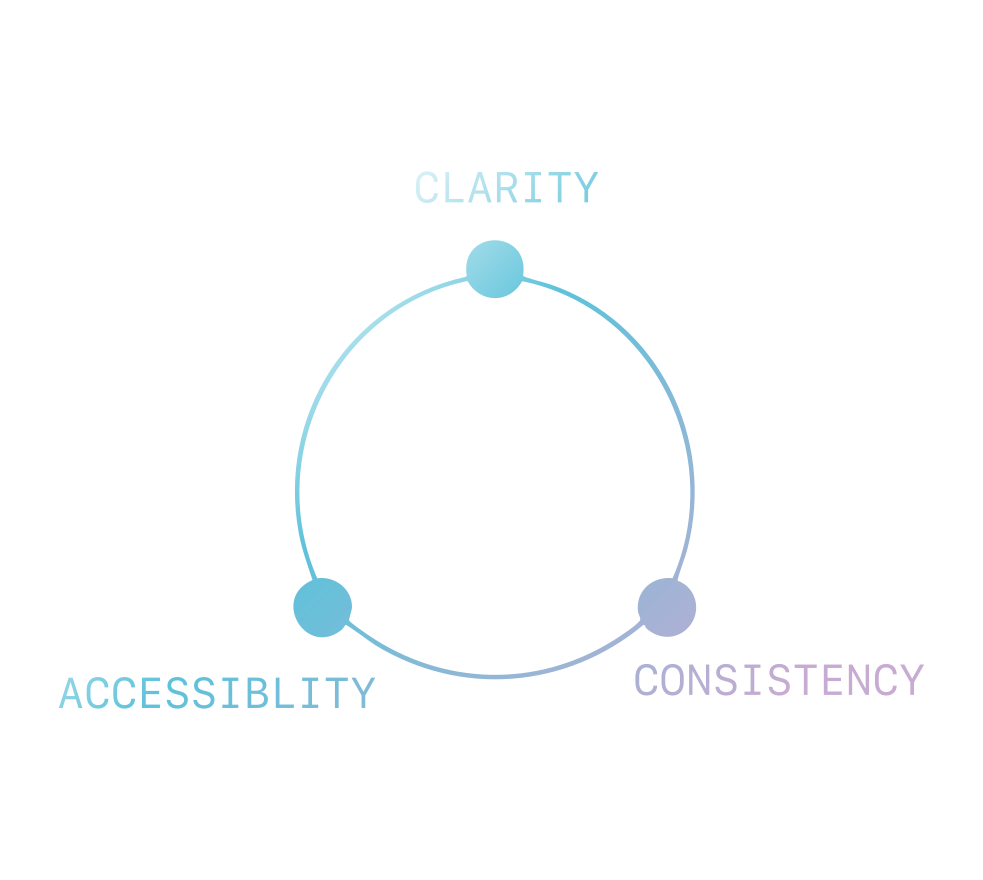
The design system was guided by a few simple rules: clarity over cleverness, accessibility first, and consistency over perfection. Every decision had to be realistic to build, easy to reuse, and scalable across products and teams.
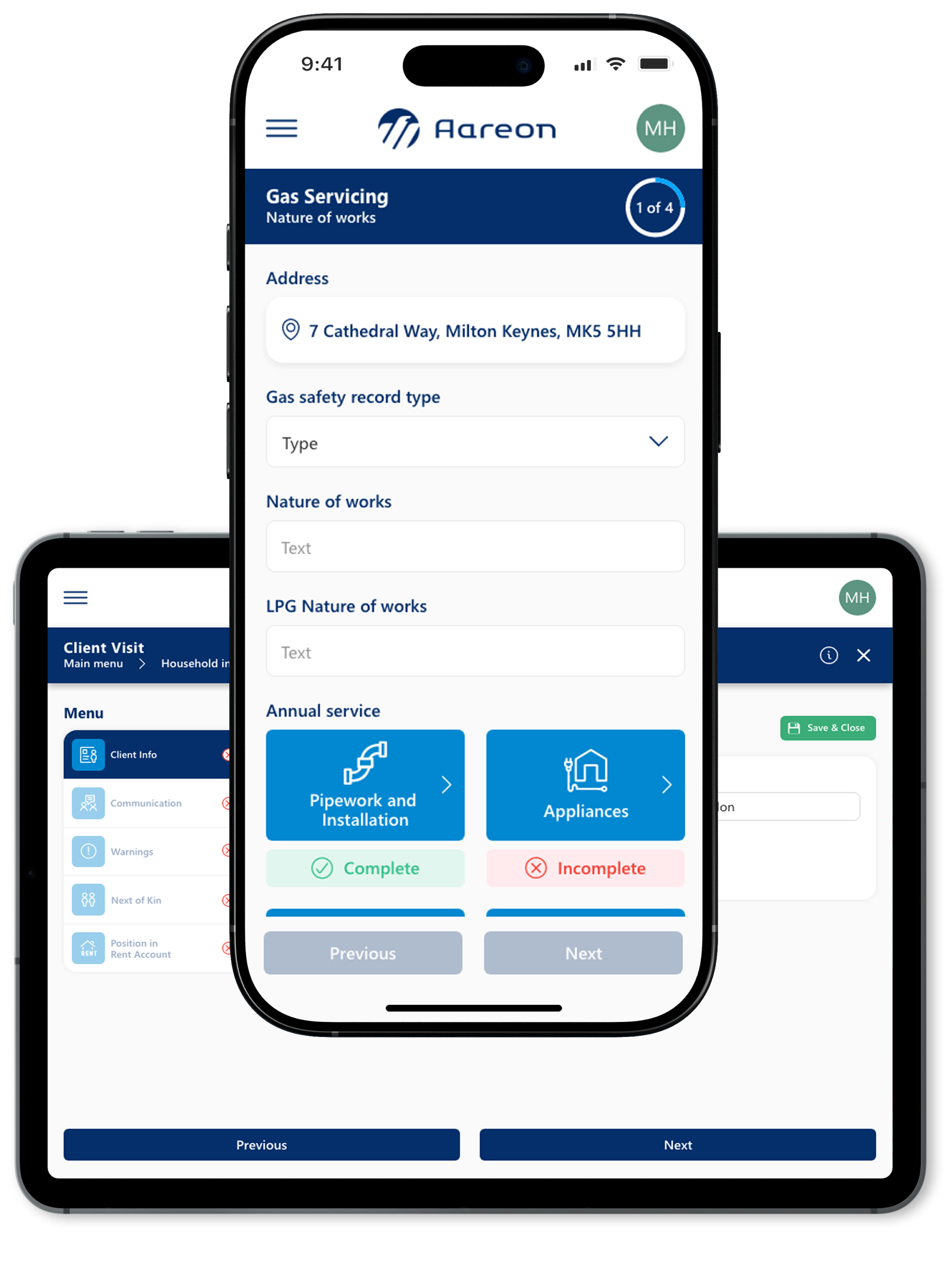
I extended the existing design system rather than rebuilding it from scratch. Using Adobe XD and Illustrator, alongside Angular and existing components, I designed implementation-ready UI and occasionally built lightweight tests to smooth the handover to development.
The updated design system helped speed up development by reducing back-and-forth and guesswork. With designs aligned to front-end realities, developers could focus on coding while Aareon moved from an old-school, legacy look to a fresher, more modern SaaS experience. This work also contributed to Aareon presenting itself as a more forward-thinking product suite during the period leading up to its acquisition by Fixflo.
Adobe XD and Illustrator were used for design and visual exploration, while VS Code was occasionally used for quick front-end tests to validate feasibility. Asana supported workload management and ticket tracking across multiple product teams.

The design system evolution was shaped by strict layout and technical constraints driven by legacy decisions. I defined clear boundaries around what could and could not change, ensuring improvements were realistic to implement while avoiding disruption across 10 live products.


Accessibility was treated as a core system requirement, not an afterthought. I aligned updates with WCAG guidelines, tested colour contrast and font scaling, and ensured components supported language tools and assistive technologies, reflecting the needs of elderly and disabled users across councils and housing providers.


Rather than full redesigns, the system focused on predictable, priority-based behaviour across desktop, tablet, and mobile. I defined how layouts adapted at different breakpoints, what remained fixed, and how components scaled to maintain clarity and usability across screen sizes.


The work refreshed Aareon’s visual language while respecting a long-established brand. I modernised colour, typography, and UI tone without rebranding, aligning 10 products with varying levels of maturity into a more cohesive, contemporary SaaS experience.


I worked closely with development teams to ensure the system was practical and easy to adopt. As trust grew, teams increasingly involved design earlier in the process, reducing rework and improving delivery flow across products.


Updates to the design system were documented and maintained in Zeroheight, ensuring decisions, usage guidelines, and constraints were clearly communicated. This created a shared reference point for designers and developers and helped future-proof the system as the products continued to evolve.
The evolved design system was applied incrementally across Aareon’s product suite, allowing teams to adopt changes without large-scale rewrites. This ensured consistency and accessibility improvements reached users while keeping delivery risk low.